




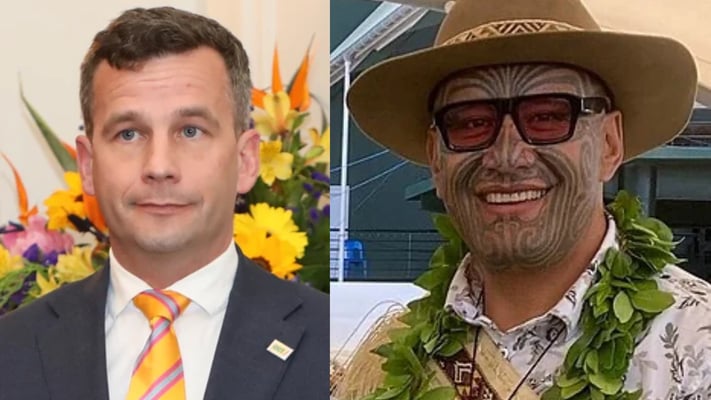



ACT Party leader David Seymour is calling for a binding referendum on abolishing New Zealand’s Māori electorates, arguing that the seats have contributed to the projected increase in Parliament's size following this year's election.

According to a report by 1News, Seymour believes changes to the Māori seats could provide a much-needed "reset" to the Mixed Member Proportional (MMP) voting system, amid concerns over the growing use of strategic voting to influence parliamentary representation.
However, Te Pāti Māori has strongly criticised the proposal, accusing ACT of shifting blame onto Māori electorates to cover for what it described as a "failed" overhang campaign by right-wing parties.
Speaking to RNZ, Seymour said a referendum would need to take place by November 2027 for any changes to come into effect before the 2029 general election.
"It would absolutely have to go to a referendum. The features of the electoral system can't be chosen by a simple majority in one Parliament," he said, as quoted by 1News.
Although abolishing the Māori seats has been part of ACT's policy platform in the past, Seymour's latest comments indicate the party is keen to bring the issue back into the political debate, as reported by 1News.
'Genie out of the bottle'
Asked whether ACT would raise the issue during coalition negotiations, Seymour suggested it had only recently become a consideration, but said, "we may well do that". NZ First has also expressed support for a referendum, as reported by 1News.
Seymour argued that strategic voting to create parliamentary overhangs had become an increasingly significant issue, saying the "genie is out of the bottle", as reported by 1News.
He pointed to countries including Italy, Wales and Lesotho, which have either abandoned or significantly reformed their proportional representation systems after parliamentary numbers increased beyond expectations.
"It becomes more about how to game the system than how to vote out bad governments, which is, I think, the primary purpose of democracy," as quoted by 1News.
Preliminary election results indicate that Parliament could expand to 131 seats, 11 more than the usual 120-seat limit. This is because National and Te Pāti Māori secured more electorate seats than their respective shares of the party vote would normally entitle them to.
Labour narrowly led the party vote with 29.4%, compared with National's 29.2%. However, National is projected to secure 42 parliamentary seats, while Labour is on track for 36.
Te Pāti Māori also encouraged supporters to give the party their electorate vote rather than their party vote. Its party vote dropped to approximately 0.6%, but it secured five electorate seats, contributing to the parliamentary overhang, as reported by 1News.
Māori seats a 'proximal cause'
Seymour, who is Māori but votes on the general electoral roll, questioned the purpose of maintaining a separate Māori roll.
He said it was "unclear what purpose a separate Māori roll serves, with the exception that it creates inherent division", as quoted by 1News.
During his interview with RNZ's Guyon Espiner, Seymour was asked how many of the countries he had cited had addressed electoral overhangs by abolishing seats reserved for Indigenous people. He acknowledged that most had never had such seats.
"I freely concede that you're still going to have the underlying problem that has led to the destruction of MMP in other jurisdictions," he said, as quoted by 1News.
"But the proximal cause of the current overhang is the Māori seats. The abolition of those is already a good idea for a bunch of reasons... but if you'd been sceptical about that reasoning in the past, it may be just the reset we need to avoid the spiralling destruction that leads to us effectively spending the next 10 years debating voting systems," as quoted by 1News.
In a 2022 policy statement, ACT described the Māori seats as "an anachronism and offensive to the principle of equal citizenship", arguing that Māori New Zealanders could win general electorate seats or list positions "without assistance", as quoted by 1News.
'Leave our electorates alone'
Te Pāti Māori rejected Seymour's argument, maintaining that the problem lies with the MMP overhang rules rather than the Māori electorates.
In a media release, party co-leader Rawiri Waititi criticised ACT for proposing to remove the seats following the election.
“ACT’s friends spent the campaign working the overhang, and it didn’t deliver,” said party co-leader Rawiri Waititi.
"Now ACT wants Māori to pay for it by removing the only seven seats we have ever been guaranteed. Fix the overhang rule. Leave our electorates alone," as quoted by 1News.
While National also secured more electorate seats than its party vote share would normally allow, some on the right had argued that an overhang was likely regardless of any deliberate split-voting strategy, given the party's declining nationwide support.
Te Pāti Māori co-leader Debbie Ngarewa-Packer said abolishing the Māori seats would breach Te Tiriti o Waitangi.
"Kāwanatanga was never a blank cheque. ACT and NZ First are asking the Crown to break its word. If it does, it has to explain what right it has left to govern us," she said, as quoted by 1News.
She also argued that Māori should have the authority to determine how they are represented in Parliament.
"Tino rangatiratanga means Māori decide how Māori are represented. ACT doesn't decide that, a coalition deal doesn't, and a referendum where Māori are outvoted doesn't either," as quoted by 1News.
NZ First has also called for a binding referendum on abolishing the Māori seats.
The final election results are expected to be announced on Friday at 2 pm, 1News has reported.


ISSUE


Leave a Comment