


Only lunar eclipse of 2026 taking place tonight
A total lunar eclipse is taking place tonight - and New Zealand has the "best seat in the world" to view it.
According to Stardome, the only lunar eclipse of 2026 (also known as a blood moon) will begin about 9.45pm.
"We are one of a few countries that will be able to witness the eclipse for its entire duration," it said on social media.
"The best time to see the blood moon will be from midnight to 1am, with the peak of the eclipse occurring just after 12.30am (Wednesday)."
Stardome astronomer Josh Aoraki earlier told RNZ lunar eclipses were not rare per se - the rarity was whether or not it was visible from your location.
"For this one in particular, we really have the best seat in the world, really. It's really only visible for its entirety over the Pacific. And it's the only one that we're going to see this year. I don't think we have another until 2028, about two years."
With Nasa's Artemis missions and sending people back to the moon, Aoraki said there was a lot of buzz and excitement around the moon and space exploration.
"Having this lunar event is just one of those reminders that there's really cool things happening up there all the time."
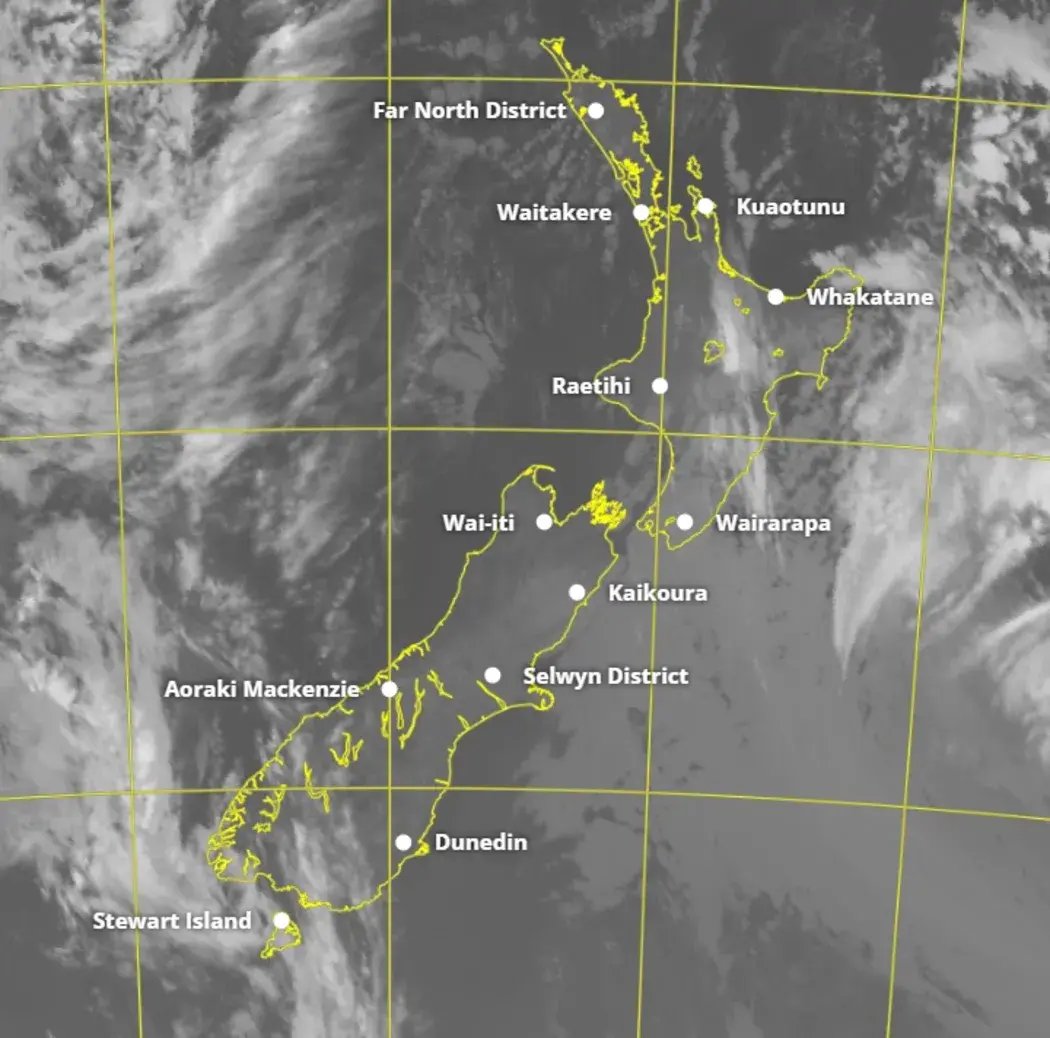
Aoraki said he had his "fingers crossed" that it wouldn't be cloudy during the event.
According to MetService meteorologist Dan Corrigan, the South Island and upper North Island will be the best places to see the lunar eclipse "If you're daring enough to leave the comfort of a warm bed".
But what do you need to see the eclipse?
Nothing special, just your eyes, Stardome said.
"Just your eyes and a clear view of the sky. Be sure to check the forecast for your local area if you're planning to watch this dazzling celestial display.
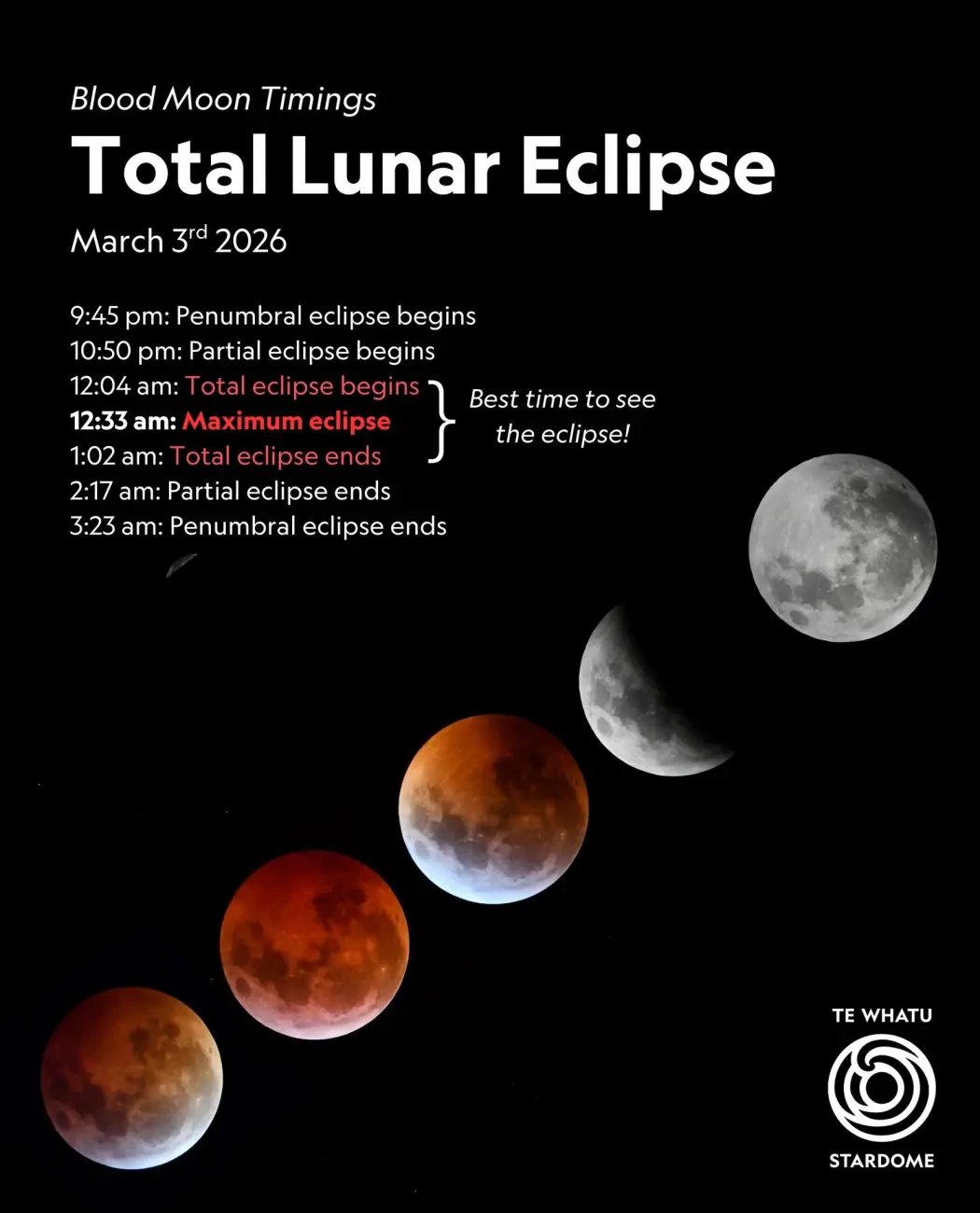
"There will not be another total lunar eclipse until 2028, and we are among the few locations able to watch the entire event unfold over the Pacific. Only an estimated 2 percent of Earth's population will be able to view this eclipse from beginning to end."
According to Nasa, totality of the eclipse will also be visible in eastern Asia, Australia, the Pacific, and North and Central America.
Partial visibility will be visible from central Asia and much of South America - but it will not be visible in Africa or Europe.

Key events - Auckland time
- 8.11pm Tuesday 3 March - Moonrise (AKL time, varies slightly between regions)
- 9.44pm Tuesday 3 March - Penumbral eclipse begins: Earth's outer shadow starts to touch the moon.
- 10.50pm Tuesday 3 March - Partial eclipse begins: The moon begins to darken as Earth's main shadow moves across it.
- 12.04am Wednesday 4 March - Total eclipse begins: The moon is fully immersed in Earth's shadow and appears red.
- 12.33am Wednesday 4 March - Maximum eclipse: The moon is closest to the centre of Earth's shadow.
- 1.02am Wednesday 4 March - Total eclipse ends: The moon begins to exit Earth's shadow.
- 2.17am Wednesday 4 March - Partial eclipse ends: The dark shadow fully clears the moon.
- 3.23am Wednesday 4 March - Penumbral eclipse ends: The Earth's outer shadow leaves the moon completely.
A total lunar eclipse is taking place tonight - and New Zealand has the "best seat in the world" to view it.
According to Stardome, the only lunar eclipse of 2026 (also known as a blood moon) will begin about 9.45pm.
{% module_block module "widget_a090db68-a103-48b7-826e-270224dc7941" %}{%...A total lunar eclipse is taking place tonight - and New Zealand has the "best seat in the world" to view it.
According to Stardome, the only lunar eclipse of 2026 (also known as a blood moon) will begin about 9.45pm.
"We are one of a few countries that will be able to witness the eclipse for its entire duration," it said on social media.
"The best time to see the blood moon will be from midnight to 1am, with the peak of the eclipse occurring just after 12.30am (Wednesday)."
Stardome astronomer Josh Aoraki earlier told RNZ lunar eclipses were not rare per se - the rarity was whether or not it was visible from your location.
"For this one in particular, we really have the best seat in the world, really. It's really only visible for its entirety over the Pacific. And it's the only one that we're going to see this year. I don't think we have another until 2028, about two years."
With Nasa's Artemis missions and sending people back to the moon, Aoraki said there was a lot of buzz and excitement around the moon and space exploration.
"Having this lunar event is just one of those reminders that there's really cool things happening up there all the time."

Aoraki said he had his "fingers crossed" that it wouldn't be cloudy during the event.
According to MetService meteorologist Dan Corrigan, the South Island and upper North Island will be the best places to see the lunar eclipse "If you're daring enough to leave the comfort of a warm bed".
But what do you need to see the eclipse?
Nothing special, just your eyes, Stardome said.
"Just your eyes and a clear view of the sky. Be sure to check the forecast for your local area if you're planning to watch this dazzling celestial display.

"There will not be another total lunar eclipse until 2028, and we are among the few locations able to watch the entire event unfold over the Pacific. Only an estimated 2 percent of Earth's population will be able to view this eclipse from beginning to end."
According to Nasa, totality of the eclipse will also be visible in eastern Asia, Australia, the Pacific, and North and Central America.
Partial visibility will be visible from central Asia and much of South America - but it will not be visible in Africa or Europe.
Key events - Auckland time
- 8.11pm Tuesday 3 March - Moonrise (AKL time, varies slightly between regions)
- 9.44pm Tuesday 3 March - Penumbral eclipse begins: Earth's outer shadow starts to touch the moon.
- 10.50pm Tuesday 3 March - Partial eclipse begins: The moon begins to darken as Earth's main shadow moves across it.
- 12.04am Wednesday 4 March - Total eclipse begins: The moon is fully immersed in Earth's shadow and appears red.
- 12.33am Wednesday 4 March - Maximum eclipse: The moon is closest to the centre of Earth's shadow.
- 1.02am Wednesday 4 March - Total eclipse ends: The moon begins to exit Earth's shadow.
- 2.17am Wednesday 4 March - Partial eclipse ends: The dark shadow fully clears the moon.
- 3.23am Wednesday 4 March - Penumbral eclipse ends: The Earth's outer shadow leaves the moon completely.


Leave a Comment