

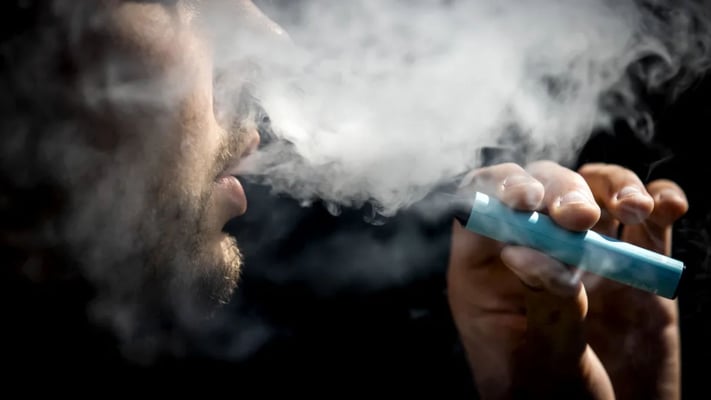

More people looking for help to give up vaping, Quitline says
More people are looking for help to give up vaping, including some who have never smoked before, according to a health support service.
Quitline recorded 4000 enrolments in its Quit Vaping progamme last year, a quarter of all the people it helped to stop vaping or smoking.
Quit advisor Dave Lowe suggested more vapers are looking to quit as they became more aware of harmful side effects.
"It's affecting their breathing. They find it harder to stay focused because they've got this other thing that they have to feed constantly," he explained.
He described a growing disillusionment with vaping, as it fell short of its early promise as a safer alternative to smoking. He said it would be more accurate to describe vaping as "less harmful' rather than safer.
He argued that vaping could be just as addictive, or even more so because it was more accessible to users. In particular, he denounced vaping's predatory marketing towards young people.
"Not too many adults want to go out and smoke, like, you know, candy floss-favoured products."
The majority, at two-thirds, of clients were still signing up for services for giving up smoking. Lowe suspected higher costs of living might be driving uptake.
"Cigarettes prices are going nowhere but up. And, you know, people found: 'Well, something's got to give'. And so they're making, not an easy decision, but [a decision] to get rid of the smokes or get rid of the vapes because it's just an extra cost that they don't actually need."
He said a third of people who joined the Quit Smoking programme were smokefree within a month.
Quitline offers nicotine products and support to smokers and vapers online and on the phone, without judgement or pressure.
Lowe explained the main focus was on breaking routines which led to smoking or vaping by creating a 'quit plan'.
Tailored to individual needs, 'quit plans' set out new routines to adopt to avoid triggers for smoking or nicotine.
Lowe illustrated this with an example from his own life: getting rid of his first smoke of the day. He realised his first smoke of the day was during his morning coffee. So he stopped drinking coffee and started making smoothies. By changing his morning rituals, he avoided a trigger for smoking.
"And the more I did it, just the more ingrained it became, and just until it just became the natural thing that I did."
Triggers depended on the individual but Lowe identified stress as the most common one.
"Stress in all its forms, it's the number one trigger that we talk about here at Quitline," Lowe said.
-RNZ
More people are looking for help to give up vaping, including some who have never smoked before, according to a health support service.
Quitline recorded 4000 enrolments in its Quit Vaping progamme last year, a quarter of all the people it helped to stop vaping or smoking.
{% module_block module...More people are looking for help to give up vaping, including some who have never smoked before, according to a health support service.
Quitline recorded 4000 enrolments in its Quit Vaping progamme last year, a quarter of all the people it helped to stop vaping or smoking.
Quit advisor Dave Lowe suggested more vapers are looking to quit as they became more aware of harmful side effects.
"It's affecting their breathing. They find it harder to stay focused because they've got this other thing that they have to feed constantly," he explained.
He described a growing disillusionment with vaping, as it fell short of its early promise as a safer alternative to smoking. He said it would be more accurate to describe vaping as "less harmful' rather than safer.
He argued that vaping could be just as addictive, or even more so because it was more accessible to users. In particular, he denounced vaping's predatory marketing towards young people.
"Not too many adults want to go out and smoke, like, you know, candy floss-favoured products."
The majority, at two-thirds, of clients were still signing up for services for giving up smoking. Lowe suspected higher costs of living might be driving uptake.
"Cigarettes prices are going nowhere but up. And, you know, people found: 'Well, something's got to give'. And so they're making, not an easy decision, but [a decision] to get rid of the smokes or get rid of the vapes because it's just an extra cost that they don't actually need."
He said a third of people who joined the Quit Smoking programme were smokefree within a month.
Quitline offers nicotine products and support to smokers and vapers online and on the phone, without judgement or pressure.
Lowe explained the main focus was on breaking routines which led to smoking or vaping by creating a 'quit plan'.
Tailored to individual needs, 'quit plans' set out new routines to adopt to avoid triggers for smoking or nicotine.
Lowe illustrated this with an example from his own life: getting rid of his first smoke of the day. He realised his first smoke of the day was during his morning coffee. So he stopped drinking coffee and started making smoothies. By changing his morning rituals, he avoided a trigger for smoking.
"And the more I did it, just the more ingrained it became, and just until it just became the natural thing that I did."
Triggers depended on the individual but Lowe identified stress as the most common one.
"Stress in all its forms, it's the number one trigger that we talk about here at Quitline," Lowe said.
-RNZ


Leave a Comment