



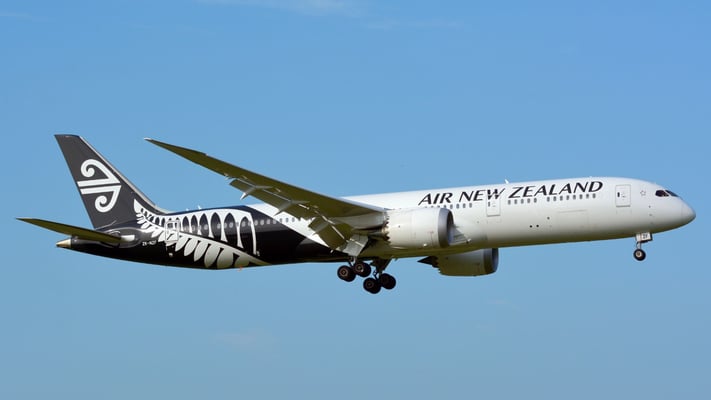



Air travel is becoming more expensive for New Zealand passengers after airlines raised ticket prices due to a sharp increase in jet fuel costs linked to the ongoing Middle East conflict. The increase means a family of four travelling overseas could pay as much as $720 more for flights.

According to a report by Emma Stanford of Stuff, Air New Zealand has already lifted fares, adding $10 one-way on domestic routes, $20 on short-haul international flights, and up to $90 on long-haul journeys. On Tuesday, a one-way economy flight from Auckland to New York for March 30 was priced at $3058, while a flight to the Sunshine Coast cost $888.
Domestic fares have also been affected. A seat-only flight from Auckland to Rotorua on March 30 starts from $159, while the short Blenheim to Wellington route was listed at $145 one-way.
In an update to the New Zealand Exchange (NZX), Air New Zealand said jet fuel prices had risen significantly. The airline had previously forecast fuel costs would average about US$85 per barrel, but prices have recently surged to between US$150 and US$200 per barrel. The airline warned it may need to take “further pricing action” and adjust its flight network and schedules if the situation continues, Stuff has reported.
Air New Zealand also said it was working on cost-reduction initiatives to offset some of the rising expenses, but declined to provide further details.
The broader aviation sector is also feeling the impact. Simon Wallace, chief executive of the Aviation Industry Association, described the situation as serious for airlines that rely heavily on fuel, Stuff has reported.
He said airlines must respond to rising costs in a similar way households manage higher petrol prices.
“Just as you might shop around for the cheapest petrol for your car, take fewer trips to the shops, or work from home, airlines need to make similar considerations,” as quoted by Stuff.
Regional carriers say the cost pressures are particularly severe. Sounds Air managing director Andrew Crawfordsaid fuel prices rose dramatically overnight on Monday.
Fuel prices had jumped 95 cents per litre, adding around $140,000 per month to the airline’s operating costs.
“We just can’t absorb that sort of price rise. It’s a very difficult situation,” Stuff has quoted.
Air Chathams chief executive Duane Emeny also described the increase as significant.
“It would add $3 million to our annual fuel bill, or $250,000 per month.”
Several regional airlines have already raised ticket prices and warned that flight schedules may need to be reduced if costs continue to rise. Originair said it was still reviewing its options.
Crawford said demand for flights remained strong, but the challenge was managing escalating operating costs.
“There’s no shortage of people flying. That is not the problem,” he said.
“We’ve got a very loyal customer base. The issue, as always, is costs,” Stuff has quoted.
Barrier Air chief executive Grant Bacon said his airline had also increased fares, though the increases still did not fully cover the rising cost of fuel.
“Hopefully, we see some relief soon, but I am not confident that this will be the reality,” as quoted by Stuff.
He urged the government to consider reducing some aviation charges to help airlines manage the situation.
“What we need is immediate relief from some government costs, such as Airways charges and CAA levies. This would provide some margin that we can then deploy towards our fuel bill in order to maintain full operations to our remote regional communities,” as quoted by Stuff.
During the pandemic, levies paid to the Civil Aviation Authority (CAA) were paused. Wallace said these levies, which fund about 90% of the CAA, amount to tens of millions of dollars for airlines such as Air New Zealand.

He noted that easing these charges could provide much-needed relief to airlines, particularly smaller regional carriers that are more vulnerable to fuel price fluctuations because they have fewer passengers to spread costs across, Stuff has reported.
Airlines warn that if the conflict continues to push oil prices higher, the cost of flying both within New Zealand and internationally is likely to increase further.


ISSUE


Leave a Comment