
Explainer: What you need to know about how MMP works
Explainer - Our MMP electoral system is marking its 30th anniversary this year, but it can still be tricky to explain exactly how it all works.
If you're confused about all the recent talk about overhangs and party votes and just want to know what you're deciding on at the ballot box, here's what you need to know about voting and MMP.
What is MMP?
MMP stands for Mixed Member Proportional representation, the electoral system used in New Zealand.
A majority of New Zealanders voted for it - twice, first in a non-binding referendum in 1992, and again in a binding referendum at the election the following year. It was introduced at the next election, in 1996.
National's leader Christopher Luxon has proposed another referendum over MMP, to be held after the 7 November election.
MMP aims to ensure that people will be represented in Parliament both by a person in their local area (electorate) and by a group (a political party).
How does it work?
New Zealanders have two votes - one for a local representative, and one for a political party. You just pick the person in your electorate you think best advances your interests, and the political party that best represents your interests.
Simple, right?
The complexity comes in when trying to calculate how these votes translate into the seats available for members of Parliament (MPs).
There are (typically) 120 seats:
[LB
- 72 are electorate seats and are won by candidates standing in specific areas
- 48 are list seats and are allocated depending on the proportion of party votes won, taking into account the number of electorate seats each party has won
Basically, it all means that the proportion of party votes should be about the same as the proportion of seats in the Parliament. Electorate MPs will belong to one party or another unless they're running as an independent, but voters do not need to vote for an electorate representative that matches their party vote.
You must be registered - or enrolled - to be able to vote, and unlike in previous elections this year you will not be able to enrol on the day, or in the two weeks before election day.
In 2026, this means voters must be enrolled before 25 October.
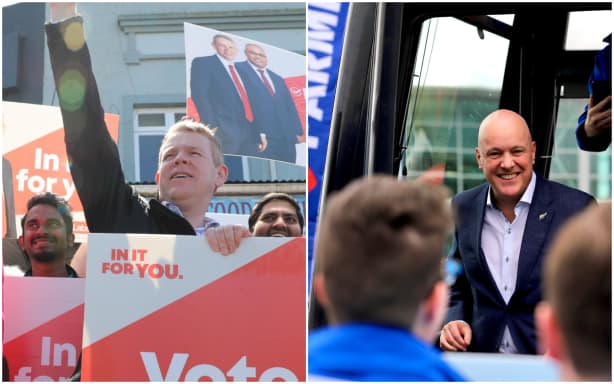
Labour leader Chris Hipkins and National leader Christopher Luxon.RNZ/ Nick Monro / Marika Khabazi
Other things to consider
A party has to win at least 5 percent of votes or an electorate seat to win a seat in Parliament.
If they win an electorate seat, the party gets allocated a percentage of list seats based on their party vote - known as the "coat tail" rule.
If a party wins more electorates than its share of party votes allows for, extra seats can be added to the Parliament to make up for the "overhang" and ensure the proportions remain correct.
For instance, this meant there were 121 MPs in 2005, 122 MPs in 2008, and 121 in 2011, and 123 - a record number of MPs - after the election in 2023. It's possible there could be even more this year due to some calls for "strategic voting" for party votes over electorate candidates.
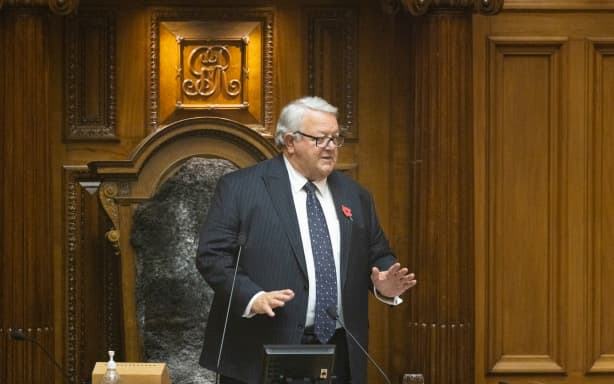
MMP determines the shape of Parliament. Gerry Brownlee has been Speaker in its most recent term.VNP/Phil Smith
So who wins the election?
In contrast to some countries overseas - the United States for example - the election in New Zealand is not voting for the country's leader. People vote only for the parties and electorates.
But someone has to be in charge. Someone has to make sure the organisations doing all the management of the country - funding hospitals and schools, repairing roads and infrastructure, managing prisons - all that administrative stuff, and more, is being done properly.
This responsibility - and the power it entails - belongs to the government.
Who gets to become the government is basically whichever party can get a majority - more than 50 percent - of the seats, based on their party vote. If none of the parties has enough to reach more than 50 percent, they must negotiate with each other about their plans until a combination of the parties has at least half the seats.
This can result in a coalition - where the bigger party and smaller party form a government together and come up with a complete policy plan - or a confidence and supply agreement, where the smaller parties agree to support the main governing party on specific policies.
Under confidence and supply, the smaller party does not need to support policies that fall outside the agreement.
With 50 percent of the seats in Parliament, the governing party or coalition can decide what to change about how the country works and enact these decisions in Parliament. We currently have a coalition government between National, New Zealand First and ACT.
The governing parties have most of the power. The parties that are not governing are known as the opposition, and it is their job to criticise and poke holes in the plans the government is putting forward.
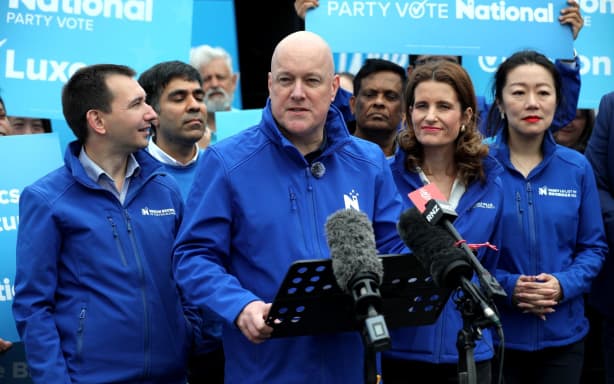
National leader Christopher Luxon has said another referendum on MMP is needed.RNZ/Nick Monro
Will MMP ever change?
Not everyone likes MMP, and National's leader Christopher Luxon is campaigning on holding a referendum on it - to test whether the public still supports the model.
This would be the fourth public vote on changing the electoral system. A consultative referendum in 1992 indicated public appetite to change the system from the previous First Past the Post approach, and a binding referendum a year later in 1993 confirmed that, prompting the shift to MMP.
At the 2011 election, another referendum asked whether voters wanted to keep MMP or replace it, and what system would be preferred if it was changed. Almost 58 percent of voters wanted to keep it, an increase of 3.91 percentage points over the 1993 result.
First Past the Post was the most popular alternative, with 46.7 percent of people selecting that over preferential voting (12.5 percent), single transferable vote (16.7 percent), and supplementary member systems (24.4 percent).
The result triggered an Electoral Commission review of how well MMP was working, which recommended several changes that have largely not been taken up.
Another review in 2022 and 2023 by the Ministry of Justice heard from more than 1700 groups or individuals and also recommended multiple changes.
The National-led coalition in 2024 rejected several immediately, and later announced plans to restrict voting by removing early and same-day enrolment and other changes.
Note: This article was originally published in 2020 but has been updated ahead of the 2026 election.
Explainer- Our MMP electoral system is marking its 30th anniversary this year, but it can still be tricky to explain exactly how it all works.
If you're confused about all the recent talk about overhangs and party votes and just want to know what you're deciding on at the ballot box, here's...
Explainer - Our MMP electoral system is marking its 30th anniversary this year, but it can still be tricky to explain exactly how it all works.
If you're confused about all the recent talk about overhangs and party votes and just want to know what you're deciding on at the ballot box, here's what you need to know about voting and MMP.
What is MMP?
MMP stands for Mixed Member Proportional representation, the electoral system used in New Zealand.
A majority of New Zealanders voted for it - twice, first in a non-binding referendum in 1992, and again in a binding referendum at the election the following year. It was introduced at the next election, in 1996.
National's leader Christopher Luxon has proposed another referendum over MMP, to be held after the 7 November election.
MMP aims to ensure that people will be represented in Parliament both by a person in their local area (electorate) and by a group (a political party).
How does it work?
New Zealanders have two votes - one for a local representative, and one for a political party. You just pick the person in your electorate you think best advances your interests, and the political party that best represents your interests.
Simple, right?
The complexity comes in when trying to calculate how these votes translate into the seats available for members of Parliament (MPs).
There are (typically) 120 seats:
[LB
- 72 are electorate seats and are won by candidates standing in specific areas
- 48 are list seats and are allocated depending on the proportion of party votes won, taking into account the number of electorate seats each party has won
Basically, it all means that the proportion of party votes should be about the same as the proportion of seats in the Parliament. Electorate MPs will belong to one party or another unless they're running as an independent, but voters do not need to vote for an electorate representative that matches their party vote.
You must be registered - or enrolled - to be able to vote, and unlike in previous elections this year you will not be able to enrol on the day, or in the two weeks before election day.
In 2026, this means voters must be enrolled before 25 October.
Labour leader Chris Hipkins and National leader Christopher Luxon.RNZ/ Nick Monro / Marika Khabazi
Other things to consider
A party has to win at least 5 percent of votes or an electorate seat to win a seat in Parliament.
If they win an electorate seat, the party gets allocated a percentage of list seats based on their party vote - known as the "coat tail" rule.
If a party wins more electorates than its share of party votes allows for, extra seats can be added to the Parliament to make up for the "overhang" and ensure the proportions remain correct.
For instance, this meant there were 121 MPs in 2005, 122 MPs in 2008, and 121 in 2011, and 123 - a record number of MPs - after the election in 2023. It's possible there could be even more this year due to some calls for "strategic voting" for party votes over electorate candidates.
MMP determines the shape of Parliament. Gerry Brownlee has been Speaker in its most recent term.VNP/Phil Smith
So who wins the election?
In contrast to some countries overseas - the United States for example - the election in New Zealand is not voting for the country's leader. People vote only for the parties and electorates.
But someone has to be in charge. Someone has to make sure the organisations doing all the management of the country - funding hospitals and schools, repairing roads and infrastructure, managing prisons - all that administrative stuff, and more, is being done properly.
This responsibility - and the power it entails - belongs to the government.
Who gets to become the government is basically whichever party can get a majority - more than 50 percent - of the seats, based on their party vote. If none of the parties has enough to reach more than 50 percent, they must negotiate with each other about their plans until a combination of the parties has at least half the seats.
This can result in a coalition - where the bigger party and smaller party form a government together and come up with a complete policy plan - or a confidence and supply agreement, where the smaller parties agree to support the main governing party on specific policies.
Under confidence and supply, the smaller party does not need to support policies that fall outside the agreement.
With 50 percent of the seats in Parliament, the governing party or coalition can decide what to change about how the country works and enact these decisions in Parliament. We currently have a coalition government between National, New Zealand First and ACT.
The governing parties have most of the power. The parties that are not governing are known as the opposition, and it is their job to criticise and poke holes in the plans the government is putting forward.
National leader Christopher Luxon has said another referendum on MMP is needed.RNZ/Nick Monro
Will MMP ever change?
Not everyone likes MMP, and National's leader Christopher Luxon is campaigning on holding a referendum on it - to test whether the public still supports the model.
This would be the fourth public vote on changing the electoral system. A consultative referendum in 1992 indicated public appetite to change the system from the previous First Past the Post approach, and a binding referendum a year later in 1993 confirmed that, prompting the shift to MMP.
At the 2011 election, another referendum asked whether voters wanted to keep MMP or replace it, and what system would be preferred if it was changed. Almost 58 percent of voters wanted to keep it, an increase of 3.91 percentage points over the 1993 result.
First Past the Post was the most popular alternative, with 46.7 percent of people selecting that over preferential voting (12.5 percent), single transferable vote (16.7 percent), and supplementary member systems (24.4 percent).
The result triggered an Electoral Commission review of how well MMP was working, which recommended several changes that have largely not been taken up.
Another review in 2022 and 2023 by the Ministry of Justice heard from more than 1700 groups or individuals and also recommended multiple changes.
The National-led coalition in 2024 rejected several immediately, and later announced plans to restrict voting by removing early and same-day enrolment and other changes.
Note: This article was originally published in 2020 but has been updated ahead of the 2026 election.


Leave a Comment