




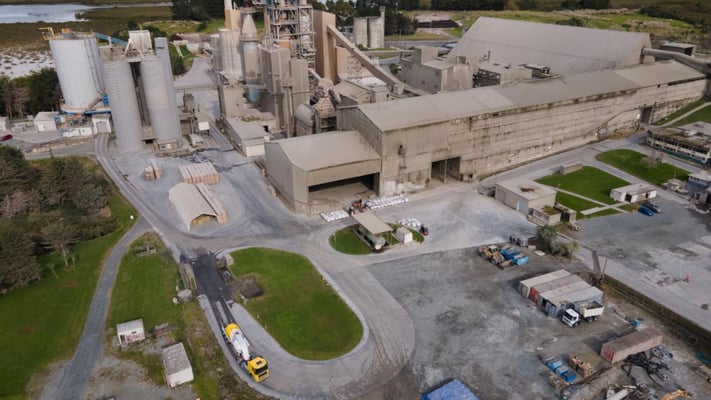



The Government has committed up to $60 million to support the continued operation of New Zealand’s only fully integrated cement manufacturing plant, saying the investment will help safeguard the country’s construction sector and reduce the risk of future supply chain disruptions.

According to a report by Stuff, Finance Minister Nicola Willis, announced on Monday that Golden Bay Cement (GBC) would receive funding to continue producing cement and clinker at its Whangārei facility until at least the end of 2040.
The agreement requires Golden Bay Cement to invest a minimum of $150 million of its own capital into the business, maintain domestic cement production and jobs, and meet additional reporting and audit requirements. The Government will also have the right to recover the funding if the company fails to meet the agreed conditions.

Willis said ministers had been advised that Fletcher Building was considering shutting down clinker production at the Whangārei site and moving to an import-only model due to increasing operating costs.
“The Government has acted to maintain New Zealand’s ongoing domestic cement manufacturing capacity and ensure our economy remains resilient to global supply chain shocks,” she said, as quoted by Stuff.
She said Cabinet determined that losing the country's only integrated cement manufacturing facility would expose New Zealand to significant risks because cement plays a critical role in national infrastructure.
“It is needed for the building of homes, hospitals, schools, roads, and other nationally significant infrastructure. Any reductions in its availability could bring essential construction and infrastructure development, and the economic activity they support, to a standstill,” Stuff has quoted.
Willis said Cabinet first considered the proposal in May before agreeing to negotiate a targeted, time-limited support package with strict conditions.
“Our Government did not take this decision lightly,” she said.
“As part of our deliberations, we commissioned an independent open-book financial assessment of the GBC operation. This concluded that there were binding constraints on the financial viability of domestic cement production, primarily due to emissions costs,” Stuff has quoted.
She said alternative options, including regulatory relief, were considered but ministers opted for direct financial support to avoid weakening the Emissions Trading Scheme (ETS).
“The agreed approach strikes the right balance, preserving a strategically significant domestic capability without creating a precedent for wider support, or undermining the integrity of the ETS,” as quoted by Stuff.
However, the decision has drawn criticism from the ACT Party, which argues taxpayers should not be responsible for subsidising the business.
ACT climate change spokesperson Simon Court said the party supports keeping the plant operational but believes the focus should instead be on improving the policy environment for manufacturers.
“Instead of forcing businesses to rely on taxpayer support, successive Governments should fix the rules that made local manufacturing uncompetitive. New Zealand should reward efficient local production, not make it easier to import higher-emissions products from overseas,” Court said, Stuff has quoted.
“Steel mills, cement plants and other energy-intensive industries invest for decades, not election cycles. They need predictable rules before they’ll commit billions of dollars to New Zealand,” as quoted by Stuff.
Court also argued the decision highlighted broader issues with the country's climate policy.
“Getting the settings right means keeping jobs here, encouraging investment, and reducing global emissions instead of simply shifting production to countries with weaker environmental standards,” as quoted by Stuff.
“New Zealand doesn’t have to choose between manufacturing and the environment. We need climate policy that supports both,” he said, Stuff has quoted.
Golden Bay Cement’s Portland plant, located about 10 kilometres south of Whangārei, is New Zealand’s only fully integrated cement manufacturing facility and produces its own clinker, the key ingredient used in cement production.
According to the Government, the company supplies around 60% of the country's cement demand, with approximately 95% of its output sold within New Zealand.
According to a report by Stuff, the facility employs about 150 full-time staff, supports another 120 contractor positions, and contributes to an estimated 600 full-time equivalent jobs across the Whangārei district. It also plays a role in waste diversion initiatives, including the Tyrewise programme, which relies on the plant's cement kiln to process waste materials.
The funding will be drawn from a tagged contingency in Budget 2026 and financed through the Government's 2026 operating allowance.


ISSUE


Leave a Comment