




“Ban the Kirpan in Papakura’s public places” online post sparks debate after Sikh couple photographed



A Sikh woman in New Zealand wearing a Kirpan (ceremonial dagger) has sparked debate on social media, with posts calling for the religious item to be banned in public.
The post, which has gained traction online, describes an incident at a Starbucks in Papakura on 13 April.
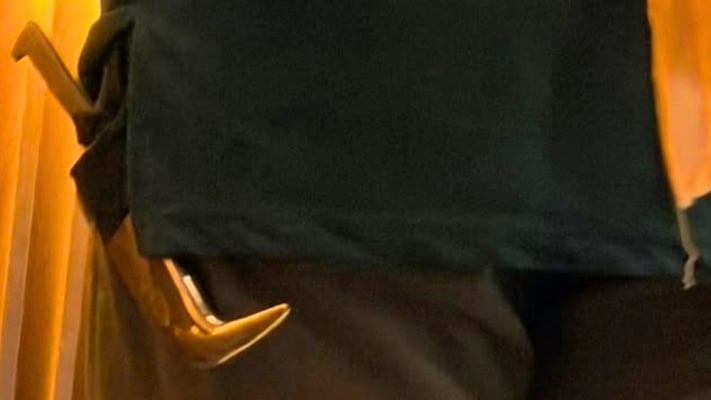
The post by Hannah Tamaki, wife of Destiny Church leader Brian Tamaki, shared her account online after she says she saw a woman, accompanied by her husband, at the counter with a visible Kirpan, captured in a photograph taken from behind.
“This morning in Papakura, I saw something that should concern every parent and every woman in our community,” the post read.
“I noticed an Indian woman wearing a visible dagger…not concealed, not discreet…openly displayed in a public place around families and children. Her husband was alongside her. I captured a photo of the dagger (but not of their faces),” the post added.
The post has since received more than 500 likes and several comments.
“I believe this is not something we should be normalising in New Zealand,” the post added.
Another post circulating online showed a separate interaction involving Tamaki being confronted by the woman’s husband on the same day after the image was shared online. In a video recorded at a nail salon, the man can be heard asking, “why did you take a photo of me and post it online,”
“Did I threaten you,” the man in the video said.
The interaction appeared calm but followed shortly after Tamaki posted the photograph of the couple at Starbucks.
Tamaki's post also mentions she later spoke with the couple after they noticed the photograph had been taken, stating the image was captured due to safety concerns.
“ I asked him if I should be allowed to wear my hunting knife too?
His response? “We have a religious exemption.”” Hannah Tamaki added to the post.
It further claimed that retailers in Papakura expressed discomfort about Kirpans being worn in the community, according to Tamaki.
The term Kirpan is derived from ‘kirpa’, meaning kindness or grace, and ‘aan’, meaning honour or self-respect. Together, it signifies honour with kindness or self-respect with grace.
The Summary Offences Act 1981 prohibits the carrying of a knife or "offensive weapon" in a public place without a "reasonable excuse".
However, in a 2022 Police guidance on offensive weapons, knives and disabling substances document released under the Official Information Act 1982, it states,
"As a general rule, a Kirpan carried or possessed in a public place for religious reasons is considered by Police to provide a reasonable excuse for the purposes of section 13A of the Summary Offences Act 1981 and section 202A of the Crimes Act 1961."
It also explains that Amritdhari (baptised) Sikhs are not known to use the Kirpan to harm themselves or others.
The same guidance document describes a Kirpan as “ a Sikh ceremonial sheathed sword hung from a shoulder sling called ‘gatra’ and can be carried by both genders, but predominantly by men. Kirpans can vary in size and are often blunt ‐ there are also smaller versions of the Kirpan worn as a necklace. “
It further explains that the Kirpan symbolises a Sikh’s duty to stand against tyranny, injustice and cruelty, and to uphold harmony and security.
However, the guidance notes there may be circumstances where the size, nature, or manner in which a Kirpan is worn or displayed in public could affect whether a “reasonable excuse” applies. In such cases, Police are advised to exercise discretion and consider all factors in accordance with the law.
New Zealand’s first Indian-born and Sikh Member of Parliament, Kanwaljit Singh Bakshi, has previously advocated for the right of baptised Sikhs to carry the Kirpan in public and workplaces. Bakshi has described the Kirpan not as a weapon, but as a "symbol of faith" that is vital to the identity of Amritdhari (baptised) Sikhs.
Speaking to The Indian Weekender, Bakshi said it is important to address misconceptions with compassion and understanding.
“Wearing articles of faith, such as the Kirpan, holds deep religious significance for baptised Sikhs and is recognised under New Zealand guidelines, which allow a Kirpan up to 6 cm in length when worn properly.”
He said similar accommodations exist in countries such as England, Australia, Canada and several European nations.
“Balancing these rights with public safety is crucial. Embracing cultural diversity and practising zero tolerance for hate helps foster unity, inclusion, and mutual respect within our society,” he said.
A Sikh woman in New Zealand wearing a Kirpan (ceremonial dagger) has sparked debate on social media, with posts calling for the religious item to be banned in public.The post, which has gained traction online, describes an incident at a Starbucks in Papakura on 13 April.The post by Hannah Tamaki,...
A Sikh woman in New Zealand wearing a Kirpan (ceremonial dagger) has sparked debate on social media, with posts calling for the religious item to be banned in public.
The post, which has gained traction online, describes an incident at a Starbucks in Papakura on 13 April.
The post by Hannah Tamaki, wife of Destiny Church leader Brian Tamaki, shared her account online after she says she saw a woman, accompanied by her husband, at the counter with a visible Kirpan, captured in a photograph taken from behind.
“This morning in Papakura, I saw something that should concern every parent and every woman in our community,” the post read.
“I noticed an Indian woman wearing a visible dagger…not concealed, not discreet…openly displayed in a public place around families and children. Her husband was alongside her. I captured a photo of the dagger (but not of their faces),” the post added.
The post has since received more than 500 likes and several comments.
“I believe this is not something we should be normalising in New Zealand,” the post added.
Another post circulating online showed a separate interaction involving Tamaki being confronted by the woman’s husband on the same day after the image was shared online. In a video recorded at a nail salon, the man can be heard asking, “why did you take a photo of me and post it online,”
“Did I threaten you,” the man in the video said.
The interaction appeared calm but followed shortly after Tamaki posted the photograph of the couple at Starbucks.
Tamaki's post also mentions she later spoke with the couple after they noticed the photograph had been taken, stating the image was captured due to safety concerns.
“ I asked him if I should be allowed to wear my hunting knife too?
His response? “We have a religious exemption.”” Hannah Tamaki added to the post.
It further claimed that retailers in Papakura expressed discomfort about Kirpans being worn in the community, according to Tamaki.
The term Kirpan is derived from ‘kirpa’, meaning kindness or grace, and ‘aan’, meaning honour or self-respect. Together, it signifies honour with kindness or self-respect with grace.
The Summary Offences Act 1981 prohibits the carrying of a knife or "offensive weapon" in a public place without a "reasonable excuse".
However, in a 2022 Police guidance on offensive weapons, knives and disabling substances document released under the Official Information Act 1982, it states,
"As a general rule, a Kirpan carried or possessed in a public place for religious reasons is considered by Police to provide a reasonable excuse for the purposes of section 13A of the Summary Offences Act 1981 and section 202A of the Crimes Act 1961."
It also explains that Amritdhari (baptised) Sikhs are not known to use the Kirpan to harm themselves or others.
The same guidance document describes a Kirpan as “ a Sikh ceremonial sheathed sword hung from a shoulder sling called ‘gatra’ and can be carried by both genders, but predominantly by men. Kirpans can vary in size and are often blunt ‐ there are also smaller versions of the Kirpan worn as a necklace. “
It further explains that the Kirpan symbolises a Sikh’s duty to stand against tyranny, injustice and cruelty, and to uphold harmony and security.
However, the guidance notes there may be circumstances where the size, nature, or manner in which a Kirpan is worn or displayed in public could affect whether a “reasonable excuse” applies. In such cases, Police are advised to exercise discretion and consider all factors in accordance with the law.
New Zealand’s first Indian-born and Sikh Member of Parliament, Kanwaljit Singh Bakshi, has previously advocated for the right of baptised Sikhs to carry the Kirpan in public and workplaces. Bakshi has described the Kirpan not as a weapon, but as a "symbol of faith" that is vital to the identity of Amritdhari (baptised) Sikhs.
Speaking to The Indian Weekender, Bakshi said it is important to address misconceptions with compassion and understanding.
“Wearing articles of faith, such as the Kirpan, holds deep religious significance for baptised Sikhs and is recognised under New Zealand guidelines, which allow a Kirpan up to 6 cm in length when worn properly.”
He said similar accommodations exist in countries such as England, Australia, Canada and several European nations.
“Balancing these rights with public safety is crucial. Embracing cultural diversity and practising zero tolerance for hate helps foster unity, inclusion, and mutual respect within our society,” he said.


Related Posts
ISSUE


Leave a Comment