


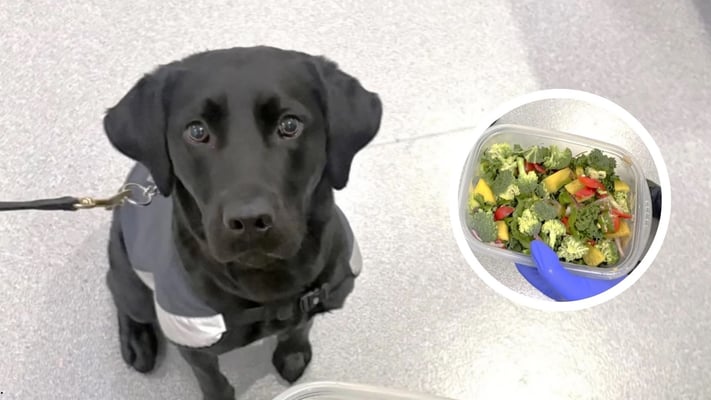

Auckland airport detector dog Sophie sniffs out undeclared food, pilots fined
Auckland Airport’s biosecurity detector dog, Sophie, has been praised after uncovering a string of undeclared risk items carried by airline crew and passengers, resulting in several infringement notices.
According to the Ministry for Primary Industries (MPI), Sophie detected three pilots carrying undeclared food items during routine biosecurity screening over the course of a month. The items included a raw vegetable salad, a banana and a chicken sandwich.
The discoveries resulted in infringement notices being issued to the three pilots, with each receiving a $400 fine for failing to declare the items.
MPI said the incidents served as a reminder that New Zealand’s strict biosecurity laws apply to everyone entering the country.
“Nobody is exempt from New Zealand’s biosecurity restrictions or our dogs’ noses,” MPI said, as quoted by Stuff.
Sophie also uncovered fresh betel nuts and banana leaves hidden in the pocket of a passenger who had not declared any biosecurity risk items on arrival. The passenger was likewise issued a $400 infringement fine.
The pilots and a passenger found carrying undeclared fresh betel nuts and banana leaves were each handed a $400 infringement fee. Photo: MPI
MPI said detector dogs are a vital part of New Zealand’s biosecurity system, helping prevent pests and diseases from entering the country and threatening agriculture, native ecosystems and the wider economy, Stuff has reported.
Authorities warned that fresh fruit and vegetables, meat products, plant materials and other biological goods can carry harmful organisms if brought into the country without proper inspection and declaration.
Travellers arriving in New Zealand are required to declare food, animal products, plants, plant-based materials, medicines containing biological substances, and equipment used in outdoor, farming, fishing or hunting activities, as reported by Stuff.
Biosecurity New Zealand advises anyone unsure about an item to declare it and seek guidance from officials.
Even unintentional false or incomplete declarations can attract a $400 infringement fee, while deliberately smuggling prohibited biosecurity goods can result in penalties of up to $100,000 and/or five years in prison.
According to Stuff, animal-based products remain a particular concern because of the disease risks they pose to New Zealand’s farming sector. Pork products and chicken are prohibited from being brought into the country.
Following her successful detections, MPI commended Sophie for her work protecting New Zealand’s borders.
“Keep up the fantastic job, Sophie,” Stuff has quoted.
Auckland Airport’s biosecurity detector dog, Sophie, has been praised after uncovering a string of undeclared risk items carried by airline crew and passengers, resulting in several infringement notices.
According to the Ministry for Primary Industries (MPI), Sophie detected three pilots carrying...
Auckland Airport’s biosecurity detector dog, Sophie, has been praised after uncovering a string of undeclared risk items carried by airline crew and passengers, resulting in several infringement notices.
According to the Ministry for Primary Industries (MPI), Sophie detected three pilots carrying undeclared food items during routine biosecurity screening over the course of a month. The items included a raw vegetable salad, a banana and a chicken sandwich.
The discoveries resulted in infringement notices being issued to the three pilots, with each receiving a $400 fine for failing to declare the items.
MPI said the incidents served as a reminder that New Zealand’s strict biosecurity laws apply to everyone entering the country.
“Nobody is exempt from New Zealand’s biosecurity restrictions or our dogs’ noses,” MPI said, as quoted by Stuff.
Sophie also uncovered fresh betel nuts and banana leaves hidden in the pocket of a passenger who had not declared any biosecurity risk items on arrival. The passenger was likewise issued a $400 infringement fine.
The pilots and a passenger found carrying undeclared fresh betel nuts and banana leaves were each handed a $400 infringement fee. Photo: MPI
MPI said detector dogs are a vital part of New Zealand’s biosecurity system, helping prevent pests and diseases from entering the country and threatening agriculture, native ecosystems and the wider economy, Stuff has reported.
Authorities warned that fresh fruit and vegetables, meat products, plant materials and other biological goods can carry harmful organisms if brought into the country without proper inspection and declaration.
Travellers arriving in New Zealand are required to declare food, animal products, plants, plant-based materials, medicines containing biological substances, and equipment used in outdoor, farming, fishing or hunting activities, as reported by Stuff.
Biosecurity New Zealand advises anyone unsure about an item to declare it and seek guidance from officials.
Even unintentional false or incomplete declarations can attract a $400 infringement fee, while deliberately smuggling prohibited biosecurity goods can result in penalties of up to $100,000 and/or five years in prison.
According to Stuff, animal-based products remain a particular concern because of the disease risks they pose to New Zealand’s farming sector. Pork products and chicken are prohibited from being brought into the country.
Following her successful detections, MPI commended Sophie for her work protecting New Zealand’s borders.
“Keep up the fantastic job, Sophie,” Stuff has quoted.


Leave a Comment